
Many sales teams do not need another large CRM screen. They need the next customer action to be clear.
A lightweight CRM workflow can be built around a shared customer record. It brings together contact details, relationship context, conversation history, current stage, next follow-up date, reminders, and simple dashboards.
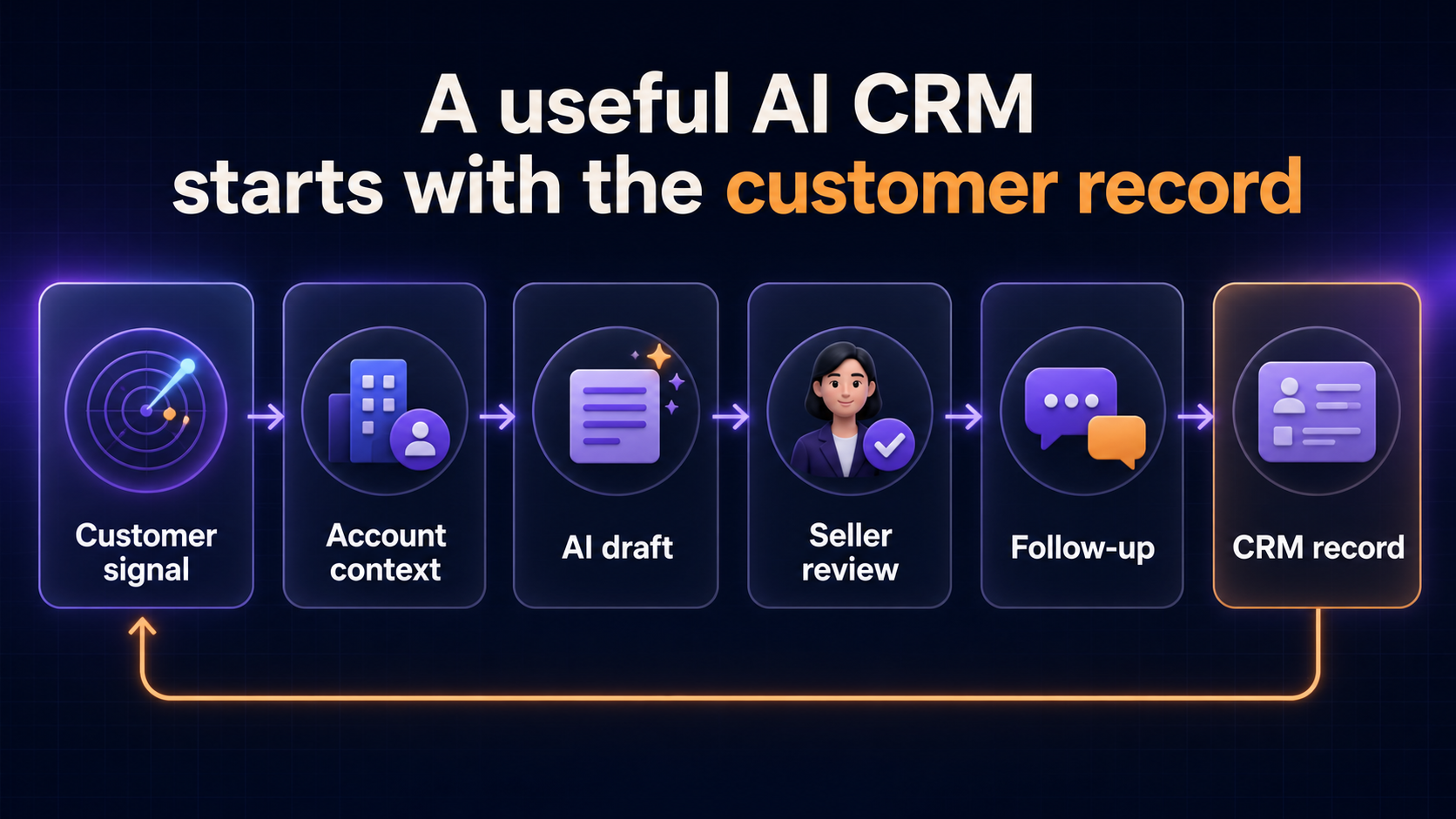
Make the record the center of the workflow
The customer record is the anchor. A conversation, form submission, voice note, follow-up date, or campaign response should become part of the same context instead of living in a personal spreadsheet or chat thread.
That creates a practical chain:
- capture the interaction in the language people already use;
- extract useful fields such as need, stage, and next action;
- attach the activity to the right customer;
- remind the owner when a promise is due; and
- make the state visible to the team.
The AI does not need to make the sales decision. It needs to reduce the amount of memory and manual sorting required to keep the relationship healthy.
Adoption is a technical requirement
The case chose a familiar table-like experience because the users already understood the mental model. That is a valuable enterprise design principle: the best tool is not always the most advanced one. It is the one people can use consistently enough to create reliable data.
If the team avoids the system, the AI layer has nothing dependable to work with. A simple, used record is more valuable than an ambitious system full of incomplete fields.
Keep the last touch human
Personalized messages and customer analysis can be drafted automatically, but the final customer-facing touch still deserves review. The same applies to numbers, recommendations, and anything that could damage trust if it is wrong.
A practical balance is to automate most of the routine preparation, but keep human ownership around the final interaction and the checks that matter.
A CRM question worth asking
Before adding an AI assistant, ask: can our system reliably tell us who the customer is, what has happened, what they need, and what should happen next?
If the answer is no, the first AI project may be a better customer record and a better follow-up loop.