
Legal teams often feel the cost of unclear process before anyone else does. A contract may pass through business, legal, finance, procurement, and leadership, but the person waiting for a signature may only know that “legal is holding it up.”
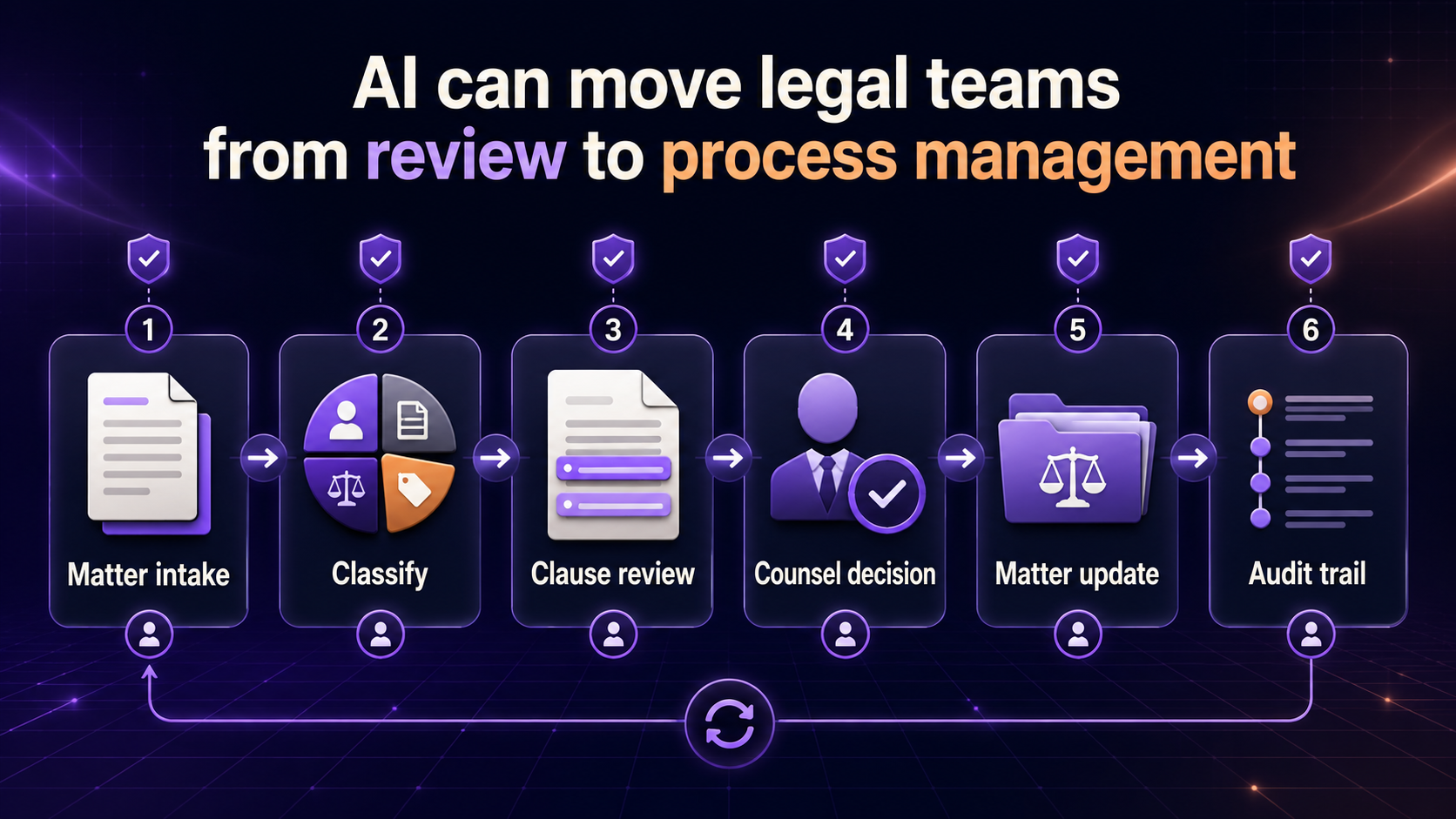
A durable legal AI workflow follows a sequence that matters more than any one model feature.
1. Put the work online
If contracts, approvals, comments, and signatures are not captured in a system, there is little reliable context for analysis or automation. Online process is the foundation for later intelligence.
2. Standardize what can be standardized
The legal team turned recurring contract patterns into reusable modules and defined when a standard document could move forward without a full manual review. This is not only a technology exercise. It requires the business and legal teams to agree on the rules behind each template.
Standardization creates a better choice for the business: use a trusted standard when speed matters, or take the full review path when the situation is genuinely different.
3. Add AI to the first pass
AI can identify basic issues, suggest changes, and draft a first version from an approved business request. The output does not need to be perfect to be useful. It needs to be a better starting point than an empty document or an unstructured email thread.
Legal review remains mandatory when the cost of error is high. The model accelerates preparation; it does not become the accountable professional.
4. Make the process visible
The most interesting part of the case is the move from document metrics to process metrics. If cycle time, late signing, handoffs, and bottlenecks are visible, legal can help the organization improve the workflow instead of only reacting to individual contracts.
That changes the role. The legal team becomes a designer of rules, controls, and operating behavior, not only a reviewer of text.
A transferable enterprise pattern
For any controlled workflow, the pattern is similar: digitize the work, define the standard path, use AI for preparation and triage, keep exceptions visible, and assign a human owner to the final decision.